The PPC agency that turns Google Ads spend into profit.
We deliver 7–11x blended ROAS across Search, Shopping, YouTube and Performance Max campaigns — and we share the dashboards, the creative, and the offer architecture behind every number.
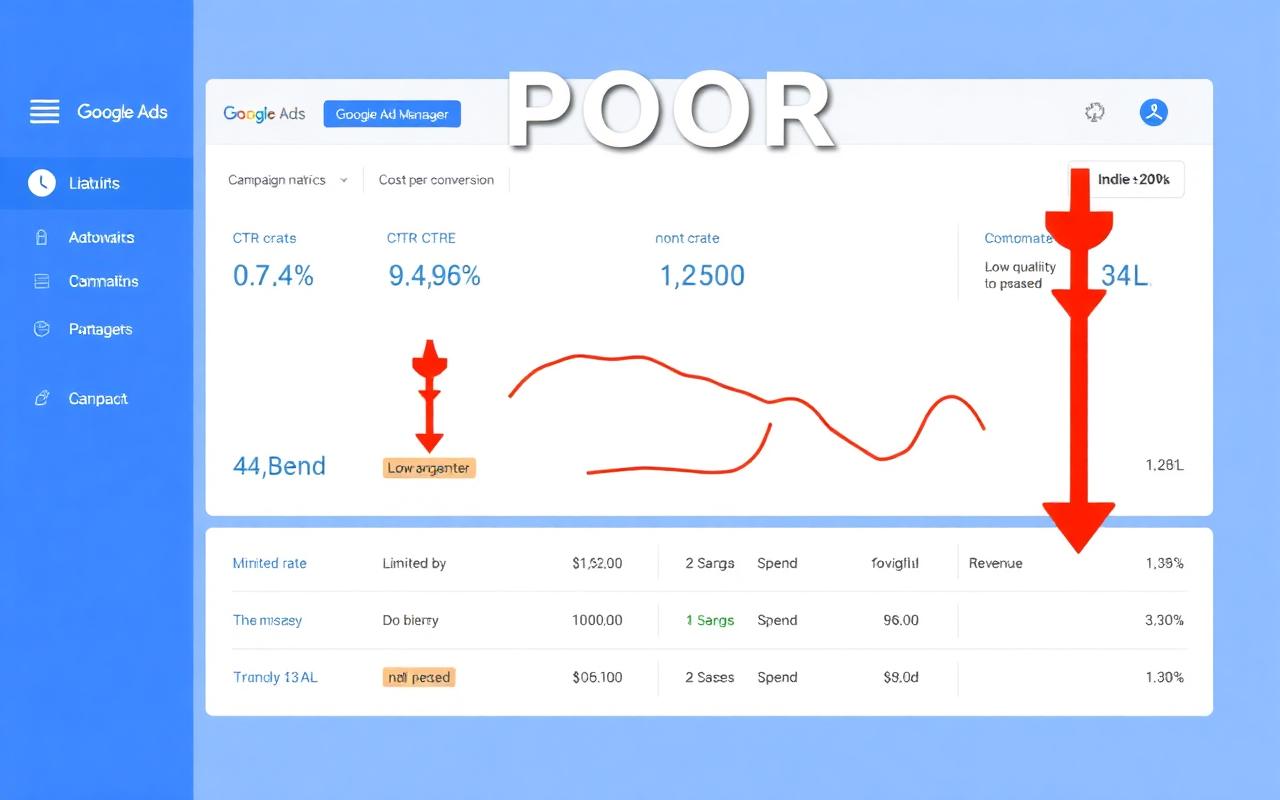
Most Google Ads accounts leak budget in plain sight.
High CPC with no clicks. Clicks with no conversions. Conversions with no revenue tracking. And sudden performance drops that nobody can explain. The platform isn't broken — the account structure, creative, and landing-page experience usually are. We fix all three.
What we do — end to end.
Fix feed health, isolate brand vs prospecting, and structure asset groups so Performance Max learns on clean data — not bloated product groups.
Tight keyword themes, single-keyword ad groups, and RSA variants that lift Quality Score and lower CPCs from day one.
Ad relevance, expected CTR, and landing-page experience scored and improved continuously — not audited once and forgotten.
Dedicated landing pages per ad group, fast LCP, clear above-the-fold CTAs, and form friction removed so clicks convert.
Google Ads conversion tag, enhanced conversions, offline import, and CRM integration so you see revenue, not just form fills. Per Google's enhanced conversions documentation, first-party data matching recovers conversions lost to browser privacy restrictions.
Weekly bid calibration, negative-keyword hygiene, creative refresh, and budget reallocation to the campaigns that actually pay.
The Google Ads tracking checklist most accounts fail.
Conversion Setup
Google Ads conversion tag installed
The base tag fires on every key action — purchase, lead, phone call, or custom event — with correct value and currency.
Enhanced conversions enabled
Hashes and sends first-party data (email, phone) to recover attribution lost to browser restrictions and iOS 14+.
Offline conversion import
CRM closed-won revenue, phone sales, and in-store visits are uploaded so Google optimises toward real revenue, not just form fills.
Phone call tracking
Dynamic number insertion and call-duration thresholds separate tyre-kickers from qualified leads in your conversion count.
Attribution
Data-driven attribution model
Last-click over-credits the final touchpoint. Data-driven weights every ad interaction that contributed to the conversion.
Cross-device path reporting
Customers research on mobile and buy on desktop. Without cross-device linking you are blind to the true funnel.
GA4 + Google Ads linked
A clean GA4 property linked to Ads with consistent event naming prevents double-counting and reporting drift.
Conversion lag monitored
B2B sales cycles can be 30–90 days. Lag reporting tells you whether last month’s dip is a real problem or just delayed attribution.
Common Tracking Pitfalls
Duplicate conversions removed
One purchase firing three tags inflates ROAS and hides true CPA. Every conversion action must fire exactly once.
Consent mode & signal loss
iOS 14+, Safari, and EU consent banners strip tracking pixels. Consent mode + modeled conversions recovers up to 60% of lost signals.
Page speed not blocking the tag
A 4-second LCP means the tag may never fire before the user bounces. Load the conversion script async and defer non-critical tags.
Thank-you-page misfires fixed
Reloads, back-button visits, and shared URLs can fire the pixel repeatedly. Fire on a server-side event or deduplicate with transaction ID.
We run this exact checklist in every audit.
Most accounts are missing 6–8 of these items. We find the gaps, fix the leaks, and rebuild your attribution so you know which £1 of spend returned £4.
Before & after — a real account.
D2C beauty (India) · Search + Performance Max · 90-day rebuild
Challenge
Bloated PMax with broken feeds, no offer ladder, and ROAS stuck under 2x. Brand and prospecting budgets mixed in one asset group.
Approach
Rebuilt feed health, isolated brand vs prospecting, added multi-language RSA variants, and layered PMax with structured asset-group themes tied to margin — following Google's Performance Max best practices for asset-group structure and audience signals.
Outcome
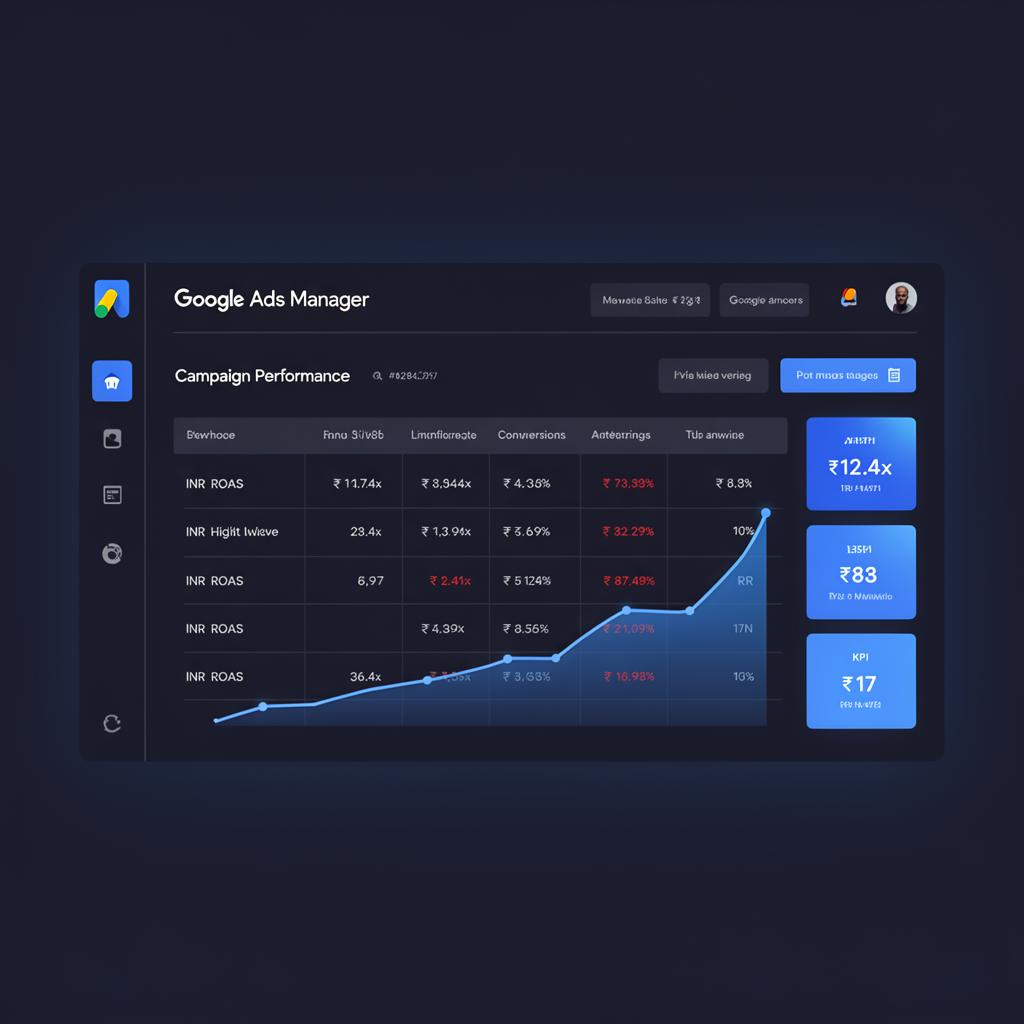
ROAS climbed from 1.2x to 7.7x. CPC dropped 62%. Conversion volume tripled without increasing total spend.
Recent Google Ads results
| Client | Campaign | Spend | Revenue | ROAS | CPA |
|---|---|---|---|---|---|
| Lumière Ayurveda | PMax + Search | ₹62L | ₹4.8Cr | 7.7x | ₹148 |
| Naadi Audio | Search + YouTube | ₹1.4Cr | ₹14.2Cr | 10.1x | ₹312 |
| Kalapani Roasters | Shopping | ₹38L | ₹3.1Cr | 8.2x | ₹96 |
| Aravalli Retreat | Search + Hotel Ads | ₹22L | ₹2.6Cr | 11.8x | ₹540 |
| Veera Couture | PMax | ₹71L | ₹6.4Cr | 9.0x | ₹1,240 |
Brands that scaled on Google Ads.
Halberd & Co.
Took a Brooklyn-based men's grooming brand from $40k to $1.2M in monthly recurring revenue with a Meta + creator UGC engine.
Cascade Outfitters
Built a 4,800-page programmatic SEO engine and Klaviyo lifecycle stack for a Denver outdoor apparel brand competing with REI and Backcountry.
Northbound Health
Engineered the HIPAA-aware paid acquisition system that took an Austin-based GLP-1 telehealth clinic from 200 to 14,000 active patients.
Bondi Reformer Co.
Launched a Sydney pilates equipment brand into Australia and the US in the same quarter — and hit AUD $6.2M in year one.
How it works
- 01
Free audit
We diagnose your account in 24 hours: Quality Score leaks, tracking gaps, keyword waste, and landing-page friction. You get a fix list with priority scores.
- 02
Pilot campaign
One channel, one ROAS target, fixed scope. Proof before scale — no long-term lock-in until the numbers work.
- 03
Scale
Profitable campaigns get more budget and wider audiences; underperformers are paused fast. Weekly war-room calls keep us aligned.
Get a free audit of your Google Ads account in 24 hours.
We'll diagnose Quality Score leaks, tracking gaps, keyword waste, and landing-page friction — then send you a priority fix list.
- · No card
- · 30-min call
- · Reply in 1 business day
FAQ
Why are my Google Ads not showing up?+
The most common culprits are: billing issues (expired card or paused account), policy disapprovals (landing page or ad copy), a depleted daily budget, overly restrictive targeting (locations, audiences, or keywords with zero search volume), or a low Quality Score pushing your ad below the first-page bid threshold. Start by checking the Status column in your Ads dashboard, then review the Policy Manager and Keyword Planner. If everything looks green but impressions are still zero, your bid strategy may be too conservative for the auction. We diagnose this in our free paid-media audit — usually the fix is a combination of keyword expansion, bid calibration, and landing-page compliance tweaks.
How long does it take to see results from Google Ads?+
You can see traffic within hours of launching, but stable, optimisable performance typically takes 2–4 weeks. The first 1–2 weeks are the 'learning phase' where Google's algorithm tests audiences, creatives, and placements. Weeks 3–4 are when you have enough data (minimum 100–200 conversions per campaign) to make statistically significant changes to bids, audiences, and ad copy. We run a structured 30-day pilot for every client: Week 1 is setup and compliance, Weeks 2–3 are data collection, and Week 4 is the first optimisation sprint. By Day 30 you should know your true CPA, conversion rate, and whether the channel is scalable.
What is a good CTR and conversion rate for Google Ads?+
For Search, a CTR of 3–5% is solid; above 7% is excellent. For Display, 0.5–1% is typical. Conversion rates vary wildly by industry: B2B SaaS often lands at 2–5%, e-commerce at 1–3%, and local services at 5–10%. The real benchmark isn't an industry average — it's your own unit economics. A 10% CTR with a 0.1% conversion rate is worse than a 3% CTR with a 4% conversion rate if the latter delivers positive ROAS. We set custom benchmarks for every client based on LTV, margin, and payback period, not generic stats. Book a call and we'll model the exact CTR and CVR you need to hit your revenue targets.
Why is my cost per click so high?+
High CPC usually means one of three things: you're competing in an expensive auction (finance, legal, insurance, or high-intent B2B keywords), your Quality Score is low (forcing you to pay more for the same position), or your targeting is too broad (wasting budget on low-intent clicks). The fix is rarely 'bid less' — it's usually 'bid smarter.' That means restructuring ad groups around tighter keyword themes, writing more relevant ad copy that lifts expected CTR, improving landing-page experience scores, and using audience layering to prioritise high-value segments. We've cut CPCs by 30–50% for clients without reducing volume — just by fixing Quality Score and negative-keyword hygiene.
How do I improve my Google Ads Quality Score?+
Quality Score is a 1–10 rating based on expected click-through rate, ad relevance, and landing-page experience. To improve it: (1) Group keywords into tight, themed ad groups — never stuff unrelated terms into the same group. (2) Write ad copy that includes the target keyword in the headline and description. (3) Send traffic to a dedicated landing page that matches the ad's promise, loads fast, and has a clear CTA above the fold. (4) Use ad extensions (sitelinks, callouts, structured snippets) to increase expected CTR. A Quality Score improvement from 5 to 7 can reduce your CPC by 20–30% and lift your ad position without increasing bids. We bake this into every campaign build.
Why am I getting clicks but no conversions?+
This is the most expensive problem in paid search. The disconnect is usually in one of four places: (1) the keyword intent is too top-of-funnel ('what is CRM software' vs 'buy CRM software'), (2) the landing page doesn't match the ad promise or loads too slowly, (3) the conversion action is too high-friction (a 12-field form for a $29 product), or (4) your tracking is broken (the conversion pixel fires on the wrong event or not at all). We audit the full path from impression to conversion: keyword → ad → landing page → form → thank-you page. The leak is usually obvious within 24 hours of looking at the data. Most clients see a 20–40% conversion-rate lift from landing-page fixes alone.
How do I track Google Ads ROI accurately?+
Accurate ROI tracking requires three things: correct conversion tracking (Google Ads conversion tag + enhanced conversions), offline conversion import (for phone sales and CRM closed-won data), and attribution modelling that accounts for the full customer journey. Don't just track 'form submit' — track qualified leads, sales calls, proposals sent, and revenue. Connect Google Ads to your CRM (HubSpot, Salesforce, or Pipedrive) so you can see which campaigns, keywords, and audiences actually produce revenue, not just leads. We set up this full-funnel tracking for every client so you know exactly which £1 of ad spend returned £4 vs which £1 returned £0.20.
Should I run Search, Display, P-Max, or YouTube ads?+
It depends on your goal and funnel stage. Search is for high-intent, bottom-funnel queries — people actively looking for what you sell. Display and YouTube are for awareness and remarketing — reaching people who don't know they need you yet. Performance Max (P-Max) is an AI-driven campaign type that runs across all Google inventory (Search, Display, YouTube, Gmail, Maps, Discover) and is best for e-commerce and lead gen when you have strong conversion data and a large product feed. We don't recommend P-Max for brand-new accounts with no conversion history — the algorithm needs data to optimise. Most of our clients run a Search + Remarketing foundation, then layer in P-Max or YouTube once the core funnel is profitable.
How much budget do I need to see meaningful results?+
The minimum viable budget is the amount that generates 100–200 conversions per month in your primary campaign. For B2B lead gen at a £100 CPA, that's £10,000–20,000/month. For e-commerce at a £25 CPA, that's £2,500–5,000/month. Below those thresholds, you won't have enough data to make statistically significant optimisation decisions. That said, you can start smaller (£1,500–3,000/month) to test messaging and landing-page performance, then scale once you have a proven offer. We tell every prospect the honest number: if your budget is below the data threshold, we'll recommend fixing your organic funnel first and coming back to paid when the economics support it.
Why did my Google Ads performance suddenly drop?+
Sudden drops usually fall into one of four categories: account changes (someone edited bids, audiences, or creatives without documenting it), competitive pressure (a new competitor entered the auction and drove up CPCs), seasonality or external events (holidays, news cycles, or industry shifts), or algorithm updates (Google occasionally rolls out changes that affect auction dynamics or attribution). The first thing to check is your Change History. The second is the Auction Insights report to see if competitor activity spiked. The third is your Search Terms report to see if irrelevant queries are eating budget. We monitor these signals weekly for our clients and run diagnostic audits within 48 hours of any significant performance shift.
Your next high-ROAS campaign starts this week.
Free 30-min strategy call. You leave with a costed channel mix, a realistic ROAS target, and a 30-day pilot scope — even if we never work together.
- → A senior media strategist, not an SDR
- → No deck pitch — you bring the account, we bring the math
- → Reply within one business day
Ready to fix your Google Ads performance?
Book a free 30-minute call. We'll audit your account, identify the biggest leak, and give you a clear fix plan — no pitch deck, just actionable answers.